
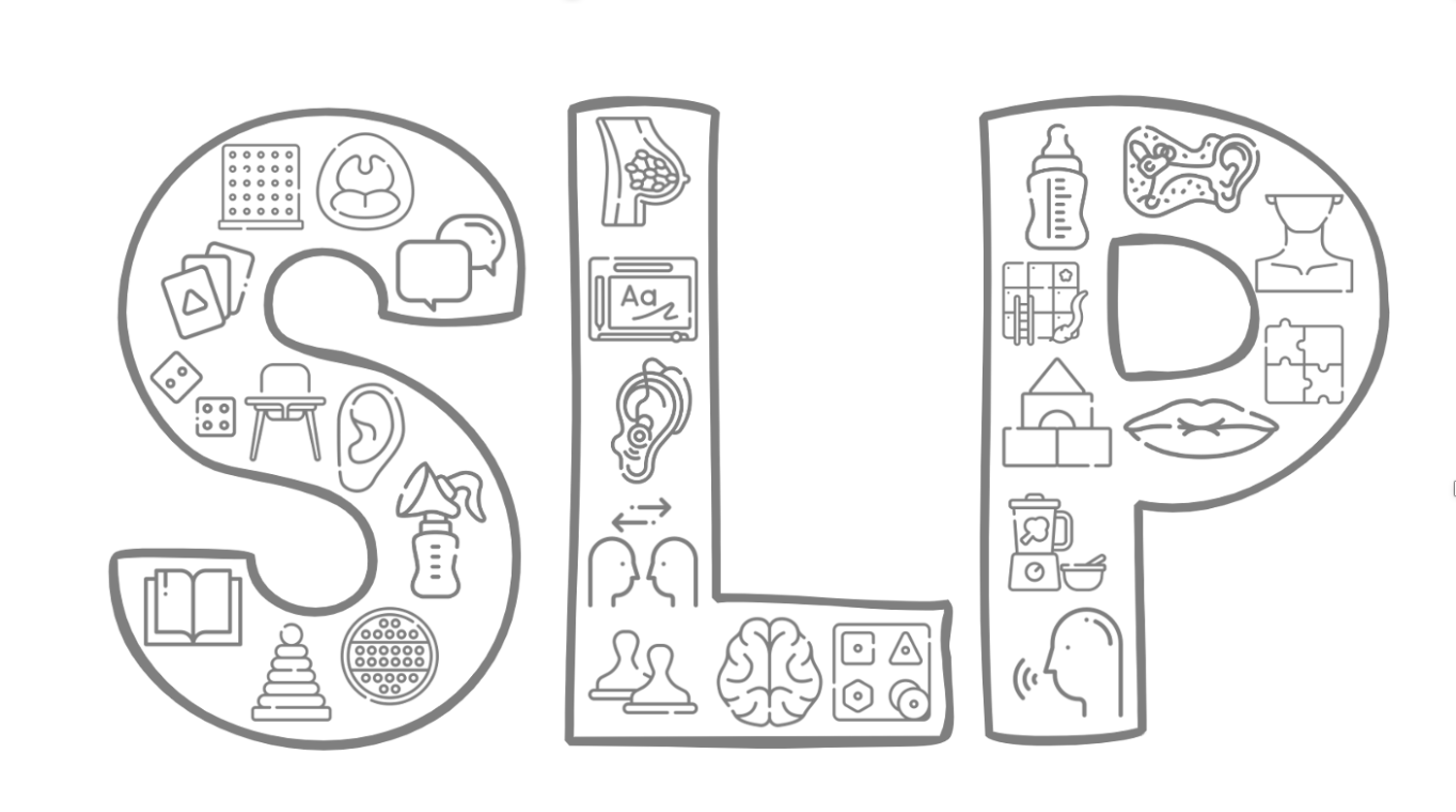
Speech therapy goes by many names such as speech-language pathology, speech-language therapy, and speech. Speech therapists are called many different names such as speech-language pathologists (SLP) and speech-language therapists. Speech-language pathologists (SLPs) treat people of all ages, though most SLPs will focus their career in either pediatrics or adults. SLPs treat a variety of speech, communication, and feeding/swallowing concerns.
Common areas of concern for the pediatric population include:
- Speech Sounds
- Language
- Literacy
- Social Communication
- Voice
- Fluency
- Cognition
- Feeding & Swallowing
Speech sound disorders are often referred to as articulation disorders, phonological disorders, apraxia of speech, dysarthria, speech intelligibility, pronunciations of speech sounds. Basically, it’s how we say our speech sounds.
Language is our ability to understand what others are saying and the ability to express information to others. Language is also our ability to understand and express written language. Common terms for language problems include receptive/expressive language disorder, developmental language disorders, and specific language impairments.
Literacy is our ability to read and write. Literacy includes the areas of decoding (reading), encoding (spelling), written expression, dyslexia, reading comprehension, and phonological awareness.
Social communication is also referred to as pragmatics. It’s how we interact with others within a societal framework through verbal and non-verbal communication.
Voice or how we use our voices to produce speech. It’s how our voices sound.
Fluency is very commonly known as stuttering. Fluency is how our speech flows when we are communicating.
Cognition is how our brains work to aid in communication. Difficulties may be noted in the areas of memory, focus, attention, organization, and problem solving. Some problem areas include traumatic brain injuries, executive functioning difficulties, ADHD/ADD, processing disorders.
Feeding & swallowing includes our ability to suck, chew, and swallow liquids and solids. Swallowing difficulties are commonly referred to as dysphagia. Feeding difficulties vary more. We usually classify feeding difficulties by oral-motor and sensory skills. Pediatric feeding difficulties are also referred to as pediatric feeding disorders but can be characterized by difficulty weaning or transitioning through liquids and solids, difficulty taking open cups or straws, as well as preferences and/or avoidances of certain foods.
There are also very common medical diagnoses and conditions that frequently require speech-language pathology involvement.
Common diagnoses and condition include:
- Autism spectrum disorders
- Developmental delays/global developmental delay
- Traumatic brain injury
- Down syndrome
- Genetic diagnoses
- Cerebral palsy
- Cleft lip and palate
- Hearing loss
Parents know their children the best. Each age brings a different set of developmental norms. It’s important to watch for these norms as your child develops. Always reference credible sources for this information such as the American Speech-Language-Hearing Association (ASHA).
For language concerns, if you feel your child is having difficulty speaking, producing, understanding, reading, or writing language you may want to talk to your child’s primary care provider for contact a speech-language pathologist.
For speech concerns, if you are concerned that your child is stuttering, unable to be understood by others, having difficulty producing speech sounds you may want to consult with your child’s doctor or a speech-language pathologist.
For feeding and/or swallowing concerns, if your child is not gaining weight or loosing weight, demonstrating strong preferences and avoidances, coughing, choking, or difficulty with feeding skills such as taking a bottle, sucking from a straw, transitioning from a bottle or between solid types, drinking from an open cup, chewing, or pocketing food you may want to consult your child’s pediatrician or a speech-language pathologist.
My advice to parents is always if you have a concern, ask about it. Don’t hesitate. It may not be an urgent issue but with the lengthy waiting lists that speech therapy always seem to have, it’s always a better idea to get it checked out sooner rather than later.
If you have any questions or concerns regarding your child’s speech and you reside in the Mansfield area, please reach out to Mansfield Pediatric Therapy. We can help you make a decision on whether or not your child needs speech therapy services.
Leave a Reply