
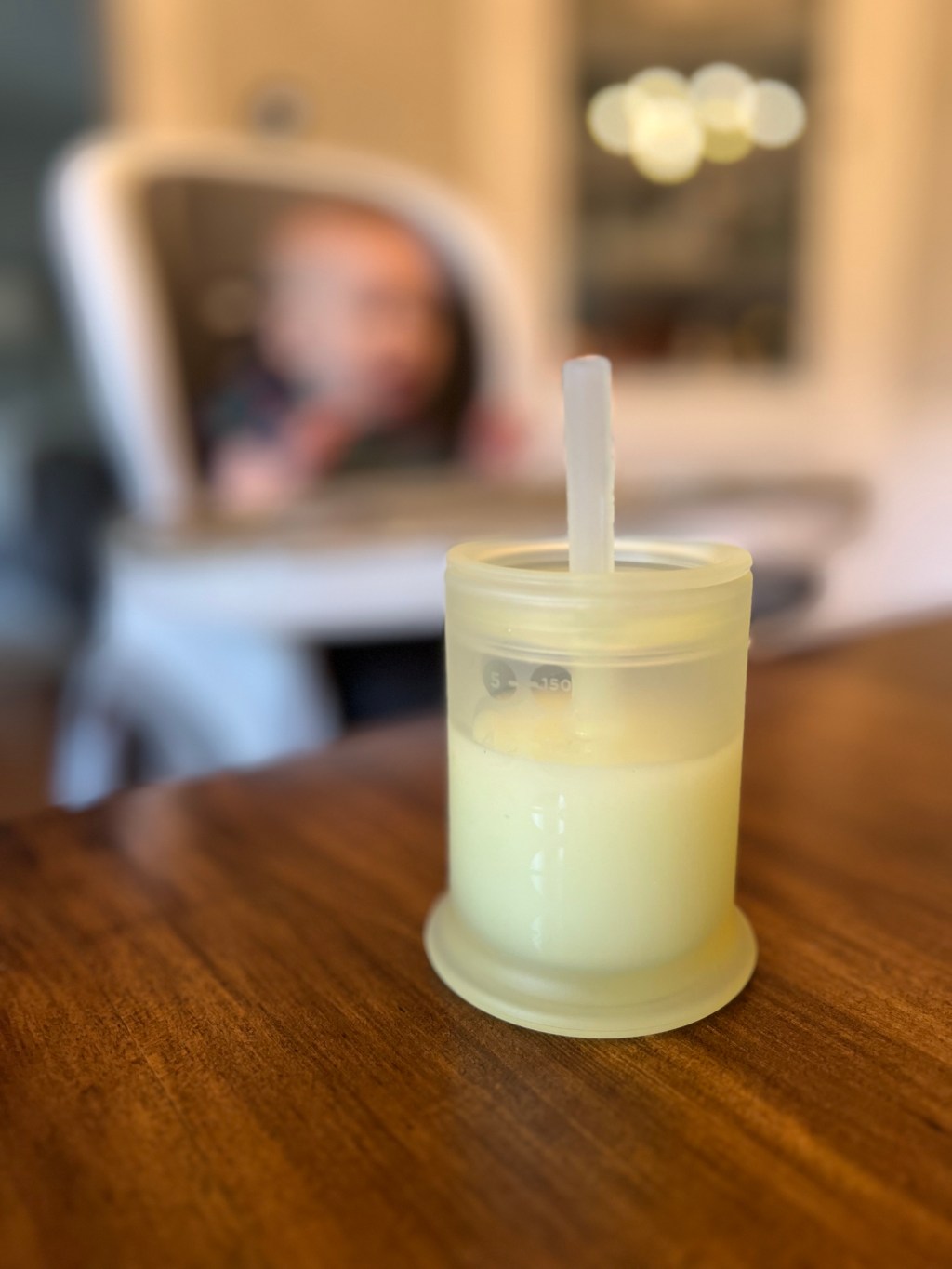
Speech-language pathologists not only help with just speech production and language difficulties they can also help with feeding and swallowing problems. In fact, “Speech-language pathologists (SLPs) play a central role in the assessment, diagnosis, and treatment of infants and children with swallowing and feeding disorders” (American Speech-Language-Hearing Association, 2024). Pediatric feeding and swallowing is an area of expertise and specialty at Mansfield Pediatric Therapy. Our SLP, Amanda Kulka has dedicated much of her career to specializing in pediatric feeding and swallowing. Amanda has specialized training and certifications in the areas of pediatric feeding and swallowing. Amanda became a Certified Lactation Counselor in 2015. Since 2017, she has been a trained professional in the SOS® (Sequential-Oral Sensory) Approach to Feeding. From 2014-2016, she was a certified practitioner for NOMAS® (Neonatal Oral-Motor Assessment Scale). Amanda evaluates and treats children as young as just a few weeks old with feeding and swallowing disorders. Read further if you would like to learn more about pediatric feeding and swallowing and how speech therapy can help!
Offering services for pediatric feeding is extremely helpful to our community as an estimated 5-20% of the pediatric population are diagnosed with pediatric feeding disorder (PFD). Feeding is different than swallowing. Feeding is defined by the American-Speech-Hearing-Language Association as, “the process involving any aspect of eating or drinking, including gathering and preparing food and liquid for intake, sucking or chewing, and swallowing (Arvedson & Brodsky, 2002). Feeding provides children and caregivers with opportunities for communication and social experiences that form the basis for future interactions (Lefton-Greif, 2008)”.
Pediatric Feeding Disorder (PFD)
A diagnosis of a pediatric feeding disorder (PFD) may be made as result of a child’s feeding difficulties. PFD is defined as, “impaired oral intake that is not age-appropriate and is associated with medical, nutritional, feeding skill, and/or psychosocial dysfunction” (Goday et al., 2019). PFD may be associated with oral sensory function (Goday et al., 2019) and can be characterized by one or more of the following behaviors (Arvedson, 2008):
- Experiencing less than optimal growth
- Refusing age-appropriate or developmentally appropriate foods or liquids
- Accepting a restricted variety or quantity of foods or liquids
- Displaying disruptive or inappropriate mealtime behaviors for developmental levels
- Failing to master self-feeding skills expected for developmental levels
- Failing to use developmentally appropriate feeding devices and utensils
Avoidant/Restrictive Food Intake Disorder (AFRID)
In addition to PFD a child may also be diagnosed with avoidant/restrictive food intake disorder (ARFID). However, unlike PFD, an SLP does not diagnose ARFID. SLPs may screen and make referrals for ARFID. “ARFID is distinct from PFD in that ARFID does not include children whose primary challenge is a skill deficit (e.g., dysphagia) and requires that the severity of the eating difficulty exceeds the severity usually associated with a certain condition (e.g., Down syndrome). ARFID and PFD may exist separately or concurrently.” (American Speech-Language Association, 2024). Feeding Matters explains ARFID as being generated “as a mental health diagnosis to describe children with feeding problems and related nutritional risk or deficiency without coincident body image problems, as seen in anorexia. PFD also may be applied to children with ARFID, as ARFID may be considered PFD when psychosocial and/or nutritional dysfunction is present in the absence of skill and/or medical dysfunction.” (Feeding Matters, 2024).
Swallowing & Dysphagia
Swallowing disorders, also referred to as dysphagia, are also relatively common in the pediatric population. Swallowing is “a complex process during which saliva, liquids, and foods are transported from the mouth into the stomach while keeping the airway protected.” (American Speech-Language-Hearing Association, 2024). Swallowing is broken up into four stages: oral preparatory, oral transit, pharyngeal, esophageal. “Dysphagia can can occur in one or more of the four phases of swallowing and can result in aspiration—the passage of food, liquid, or saliva into the trachea—and retrograde flow of food into the nasal cavity.” (American Speech-Language-Hearing Assocation, 2024).
“Consequences of feeding and swallowing disorders can include:
- Food aversion
- Oral aversion
- Aspiration pneumonia and/or compromised pulmonary status
- Undernutrition or malnutrition
- Dehydration
- Gastrointestinal complications, such as motility disorders, constipation, and diarrhea
- Poor weight gain and/or undernutrition
- Rumination disorder (unintentional and reflexive regurgitation of undigested food that may involve re-chewing and re-swallowing of the food)
- An ongoing need for enteral (gastrointestinal) or parenteral (intravenous) nutrition;
- Psychosocial effects on the child and their family
- Feeding and swallowing problems that persist into adulthood, including the risk for choking, malnutrition, or undernutrition.” (American Speech-Language-Hearing Association, 2024).
Feeding & Swallowing Evaluations
Speech-language pathologists can help you navigate your child’s feeding and/or swallowing difficulties throughout the entire process. SLPs may be present from the beginning completing the evaluation. Evaluations for feeding disorders usually do not require the need for instrumental assessment, unless there is a swallowing concern. Instrumental assessments include videofluoroscopic swallow study (VFSS) and flexible endoscopic evaluation of swallowing (FEES). Clinical evaluations will thoroughly assess your child’s feeding including how they manage the feeding, suck-swallow-breathe (infants), oral readiness, non-nutritive-sucking (infants), variety and volume of food intake, willingness to accept feeds, current oral-motor skills and limitations, optimal feeding method, secondary disorders impacting feeding and swallowing, effects of feeding on respiration and oxygenation, length of the feeding, issues related fatigue and volume intake, issues with hydration/nutrition intake, any strategies that may improve function.
Feeding & Swallowing Treatment
SLPs work closely with families and complete on-going assessments with each treatment session to adjust and recommend strategies, techniques, and actions to take when not in therapy. These can include positional/postural techniques, diet modifications, precautions, appropriate equipment and utensils, oral-motor treatments, feeding strategies such as pacing, cue-based feeding, responsive feeding. Additionally, sensory stimulation techniques and behavioral interventions may be utilized.
Resources
American Speech-Language-Hearing Association (n.d). Pediatric Feeding and Swallowing. (Practice Portal). Retrieved August 30, 2024 from www.asha.org/practice-portal/clinical-topics/pediatric-dysphagia/.
Feeding Matters (n.d.) Retrieved August 30, 2024 from https://www.feedingmatters.org/.
 Mansfield Pediatric Therapy
Leave a comment